Oracle EBS Insights: Support, Migration, Testing and Governance
Everything we know about running Oracle E-Business Suite well, with a dedicated guide for each service area.
- 1.Related Pages in This Section
- 2.Oracle E-Business Suite Expertise You Can Rely On
- 3.Everything We Deliver for Oracle EBS Environments
- 4.Why Specialist Oracle EBS Expertise Drives Better Outcomes
- 5.Managed Support: Keeping Oracle EBS Stable and Performing
- 6.OCI Migration: Modernising Oracle EBS Without Disruption
- 7.Integration, Testing and Change Management for Oracle EBS
- 8.Data Archiving, Purging and the Oracle EBS Support Lifecycle
Oracle E-Business Suite is a deeply integrated ERP platform. This guide explains what it takes to support, migrate, test and govern it well, and how to choose a specialist partner.
- ✓Oracle EBS covers finance, HR, supply chain and more, with module interdependencies that need specialist knowledge
- ✓Customisation, upgrades and integrations carry real risk without experienced oversight
- ✓Managed support, OCI migration, testing and archiving each have their own dedicated guide
- ✓Choosing the right partner determines whether a project runs smoothly or becomes costly
Related Pages in This Section
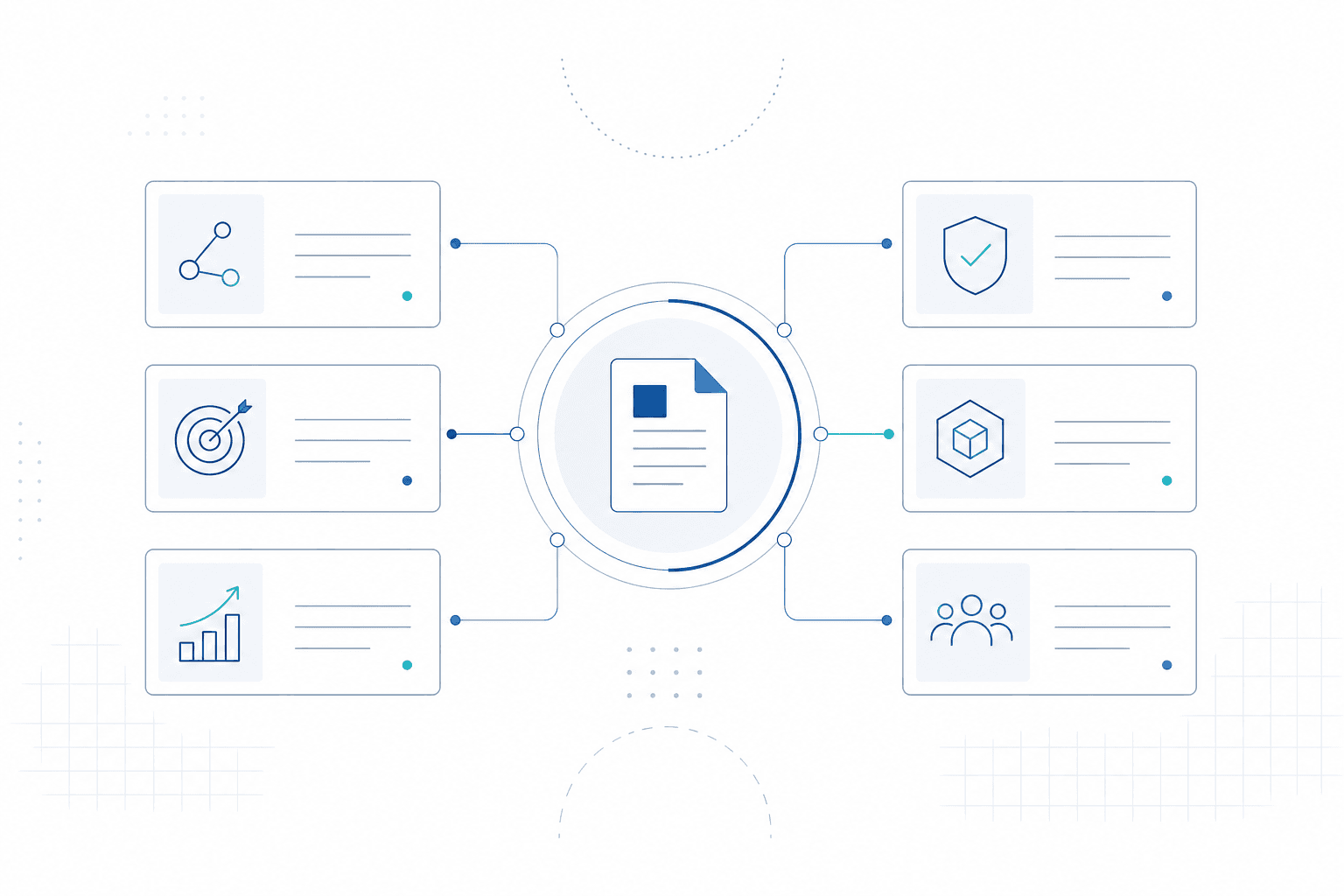
Use the links below to find the area most relevant to what you're working on.
Support and technical operations
Day-to-day functional managed support across the core EBS modules lives on our functional managed support page. DBA and infrastructure work is separate. For that, go to DBA and technical support.
Consultancy and project resource
Need experienced hands on a project? We provide Oracle EBS consultants resource for both ongoing engagements and fixed-scope work. Both models are covered.
Migration to OCI
Not a sales pitch. Just the steps, laid out in practical terms. Our OCI migration steps and timeline page covers the process and timeline without the noise.
Testing, integration, and customisation
These run as distinct service areas—worth knowing what separates them before scoping anything. The three pages are:
- Oracle EBS testing: UAT, regression and test data
- Oracle EBS integration services
- Oracle EBS customisation and automation
Change management, training, and archiving
For adoption and project governance, see Oracle EBS training and project governance.
Database growth is a problem most EBS teams underestimate. Oracle EBS archiving and purging covers how we handle it—purging, archiving, and keeping size from becoming a performance issue.
Further reading
Unsure what happens to your support arrangements once an implementation partner exits? Oracle EBS support lifecycle on our Insights blog is worth a read.
Oracle E-Business Suite Expertise You Can Rely On
Oracle E-Business Suite is one of the most widely deployed ERP platforms in the world. Finance teams, manufacturers, healthcare providers, public sector organisations — they all rely on it to run critical processes. Accounts payable, general ledger, procurement, inventory, HR. The full picture.
It's also genuinely complex.
The architecture runs deep. Module interdependencies take real time to understand properly, and the upgrade path requires serious planning. This isn't a system you can run well without experienced people behind it.
We see the consequences of that gap regularly during technical engagements — misconfigured modules, poorly designed integrations, upgrades pushed through without proper testing. These problems rarely surface immediately. But when they do, they're expensive and slow to fix.
So who's involved at every stage matters enormously.
Whether you're implementing Oracle EBS for the first time, moving off an older release, extending the platform with custom functionality, or connecting it to third-party systems — the decisions made early follow you for years. A common mistake we see is treating those early-stage choices as low-stakes. They aren't.
Related pages in this section
The pages in this section cover each of those areas in detail. What the work actually involves, what good practice looks like, what's worth asking before you commit to a direction. No filler. Just clear information to help you make better decisions about Oracle EBS.
Everything We Deliver for Oracle EBS Environments
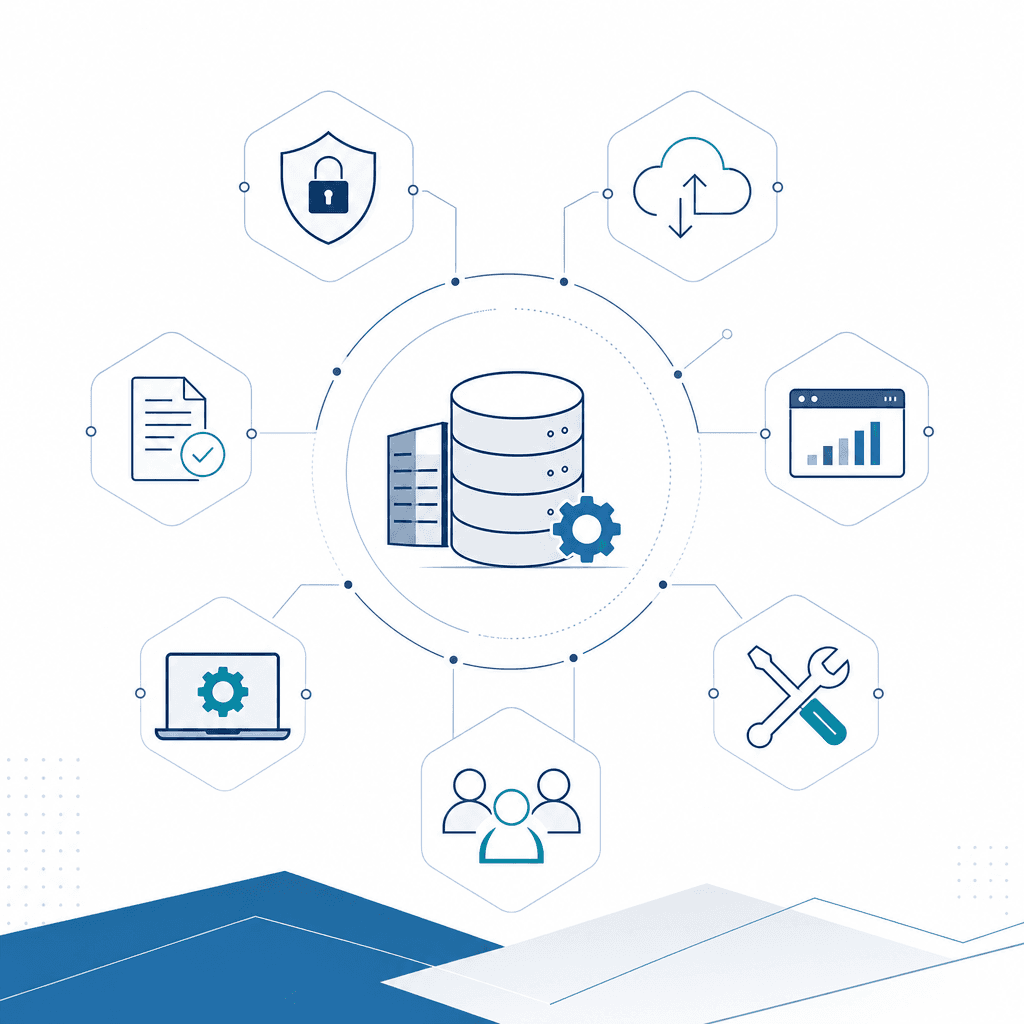
Oracle E-Business Suite is one of the most complex ERP platforms still in active use. Financials, procurement, supply chain, HR, manufacturing — often running simultaneously, often deeply customised, often carrying years of technical debt.
Generalist IT support tends to fall short here. Fast.
We work exclusively with businesses running Oracle EBS. That focus means our consultants know the platform's architecture and module interdependencies at a level that only comes from repeated exposure — not from skimming documentation before a kickoff call.
Here's exactly what we deliver.
Core Services for Oracle EBS
Technical Support & Managed Services
Day-to-day support for Oracle EBS instances, including patch management, performance tuning, and incident resolution. We monitor your environment proactively so issues are caught before they affect operations.
Upgrades & Migrations
Whether you are moving between EBS versions or planning a transition to Oracle Cloud, we manage the full upgrade cycle — from impact assessment through to post-migration validation.
Customisation & Integration
We build and maintain custom extensions, workflows, and third-party integrations that connect Oracle EBS to your wider technology stack without breaking standard functionality.
Audit, Health Checks & Compliance
Structured reviews of your Oracle EBS configuration covering security, data integrity, licensing compliance, and system performance — with a written report and prioritised recommendations.
So what does the difference between a specialist and a generalist actually look like in practice?
It shows up in how quickly a fault gets diagnosed. How confidently a recommendation gets made. Whether the advice you receive actually accounts for how your modules interact with each other. During EBS audits we often see environments where well-meaning IT contractors have introduced problems that take months to unwind — not through carelessness, but because EBS is genuinely difficult. That's just an argument for working with people who know it properly.
15+
Years supporting Oracle EBS environments
200+
EBS projects delivered
98%
SLA adherence across managed clients
40+
Oracle EBS modules covered
Reactive support is the floor, not the ceiling.
Oracle's EBS roadmap keeps moving. The decisions you make today — about customisations, integrations, infrastructure — will directly affect your options in three to five years. Our consultants factor that into every engagement, whether it's a contained project or an ongoing managed service.
One thing clients consistently tell us they value: we work alongside internal IT teams, not around them. Specialist depth where it's needed. No manufactured dependency, no displacement of existing capability — just coverage for the ground that requires real EBS experience.
Further Reading on Oracle EBS
If you're evaluating support partners, planning an upgrade, or trying to get a clearer picture of what good EBS management actually looks like — the resources above are a useful place to start.
Why Specialist Oracle EBS Expertise Drives Better Outcomes
Oracle E-Business Suite is not a platform you can figure out as you go. Its modules — Financials, Procurement, Supply Chain, HR — share data structures, business rules, and configuration dependencies that interact in ways most generalist consultants simply don't anticipate.
When something breaks in that environment, the cost of working with someone learning on the job usually isn't visible until the damage is already done.
Specialist expertise changes that entirely. A team with deep Oracle EBS knowledge understands not just how individual modules work in isolation, but how a change in one area ripples through to three others. That reduces implementation risk, shortens resolution times, and produces configurations that reflect how the platform is actually designed to work — not workarounds that quietly accumulate technical debt until your next upgrade.
Depth Reduces Implementation Risk
Specialists who understand Oracle EBS module interdependencies identify downstream impacts before they become problems, reducing rework and keeping projects on schedule and within scope.
This is especially true during upgrades, patch cycles, and compliance-driven changes.
Oracle EBS environments are never static. Regulatory requirements shift, business processes evolve, and Oracle itself releases updates that need careful evaluation before they get anywhere near a production environment. We see this constantly during technical audits — teams without sustained EBS experience treat each engagement as a standalone task. Specialists treat your environment as an ongoing system with history, dependencies, and a roadmap.
Treating EBS Patches as Routine
Many organisations apply Oracle EBS patches without first assessing the impact on customisations and integrations. This is one of the most common causes of post-patch instability in production environments.
Then there's customisation. Oracle EBS supports a significant degree of configuration and extension — but not all approaches are equal.
Some introduce fragility that compounds quietly over time, particularly when upgrades are applied. The tricky part is knowing which extension points Oracle supports cleanly and which ones will cause problems down the line. That knowledge only comes from repeated, hands-on work across different industries and deployment scenarios. There's no shortcut to it.
In our experience, the organisations that get the most out of Oracle EBS are those that treat platform knowledge as a long-term asset, not a one-off project resource. The investment in specialist expertise compounds — each engagement builds context that makes the next one faster and lower risk.
The difference shows up in practical terms:
- ✓Fewer support escalations
- ✓More stable release cycles
- ✓Configurations that hold up as the business changes
Generalist support can keep the lights on. Specialist Oracle EBS expertise keeps the platform working in step with the business that depends on it.
Managed Support: Keeping Oracle EBS Stable and Performing
Oracle EBS touches nearly every part of your business — finance, procurement, manufacturing, HR. When something goes wrong, it doesn't stay contained.
The impact spreads fast.
Managed support exists to stop that from happening. And when issues do occur, to resolve them quickly before they cascade into something much harder to fix.
Most internal IT teams hit a wall. They can keep things running under normal conditions, but performance degradation, failed concurrent requests, patching backlogs, integration breaks — that's where things start slipping. We see this constantly. The team is stretched, tickets pile up, and the system quietly gets worse. Nobody raises an alarm because nothing has technically broken yet.
That's the gap structured, specialist-led managed support is designed to fill.
What Managed Support Actually Covers
Good managed support is not a help desk with a ticketing system. It's a proactive, structured service — and the scope matters considerably more than most teams expect.
- Monitoring and incident response — identifying issues before users report them, and resolving them within agreed timeframes
- Patch assessment and application — evaluating Oracle's quarterly CPU patches and applying them safely, with regression testing to confirm nothing breaks downstream
- Performance tuning — reviewing database query plans, concurrent manager queues, workflow backlogs, and custom code that may be degrading response times
- Break-fix support — resolving failures in standard and customised functionality across all active modules
- User and configuration support — helping your teams work within the system correctly, and adjusting setup as business needs change
The tricky part is that most organisations only realise how much this covers once something falls through the cracks.
Oracle EBS Managed Support Health Check
- ✓Confirm patch level is current and CPU patches are applied on schedule
- ✓Review concurrent manager queue depths and processing times
- ✓Check workflow background engine for stuck or errored items
- ✓Audit database alert log for ORA errors and space warnings
- ✓Validate integration touchpoints with third-party systems are completing successfully
- ✓Review custom code and personalisation for performance impact
- ✓Confirm backup and recovery procedures are tested and documented
- ✓Assess open SR (service request) backlog with Oracle Support
Proactive vs Reactive: Why the Distinction Matters
Reactive support waits for something to break. Proactive support watches the system continuously and acts before a warning becomes an outage.
For Oracle EBS, that means scheduled health reviews — not just sitting on alerts and hoping nothing explodes.
Performance problems in Oracle EBS rarely appear overnight. A workflow table grows slowly. A concurrent program takes a few seconds longer each week. An index hasn't been rebuilt since the last data migration. None of it triggers an immediate alarm. But left alone, it compounds.
During technical audits we often see systems where these issues have been quietly building for months, sometimes years. By the time someone notices, the fix is significantly harder than it needed to be.
Catching these things early is exactly what a proactive managed support model does.
Related Oracle EBS Resources
The Cost of Inadequate Support
Underinvestment in Oracle EBS support shows up in predictable ways.
Patches get skipped because no one has capacity to test them. Workarounds pile up because root causes are never actually fixed. Customisations stop working after an upgrade because the person who built them left and nothing was documented. Each of those is a real risk — an unpatched system is a security and compliance liability, and accumulated workarounds make everything increasingly fragile.
Undocumented customisations are a serious problem. A common one, too.
A properly run managed support service keeps all of this under control. Clear records of what's been changed, why it was changed, and what depends on it. That documentation alone saves organisations significant pain down the line.
Specialist Knowledge, Applied Consistently
Oracle EBS is complex. Supporting it well requires people who know it deeply — not just the functional side of one module, but how the technical architecture behaves under pressure, how the database layer performs under load, and how to get real traction when escalating issues through Oracle's own support processes.
Continuity matters just as much as expertise.
A support team that has worked with your specific instance over time knows its history — the decisions made, the known quirks, the customisations that need careful handling. That context shortens resolution times considerably. A generalist picking up a ticket cold simply cannot move as fast.
Key Takeaways
- ✓Managed support for Oracle EBS should be proactive, not just reactive — monitoring for problems before they escalate.
- ✓Patch management, performance tuning, and break-fix resolution are core elements of a structured support service.
- ✓Accumulated workarounds and undocumented customisations increase risk over time; managed support keeps these under control.
- ✓Specialist knowledge of Oracle EBS — technical and functional — significantly reduces resolution time compared to generalist IT support.
- ✓Continuity within a support team builds system knowledge that improves response quality and reduces repeat incidents.
OCI Migration: Modernising Oracle EBS Without Disruption
Moving Oracle EBS to Oracle Cloud Infrastructure is one of the more consequential infrastructure decisions an organisation can make. Done well, it cuts costs, improves performance, and keeps you aligned with Oracle's product roadmap. Done poorly, you're looking at extended downtime, data integrity problems, and post-migration instability that can drag on for months.
Oracle EBS was never designed as a cloud-native application.
It carries years of configuration, customisations, and integrations that have to be assessed and, in many cases, re-engineered before migration can proceed safely. A lift-and-shift approach rarely solves anything. It usually just relocates existing problems to a new environment.
Migration Is Not Just Infrastructure
An OCI migration touches application configuration, integrations, custom code, and database dependencies. Treating it as a pure infrastructure project is one of the most common reasons migrations run over time and budget.
So where does a structured migration actually start? With a detailed current-state assessment. Every customisation, every integration point, every scheduled concurrent request, every third-party dependency — catalogued. That inventory becomes the foundation of a migration plan that sequences work to minimise risk, not just minimise elapsed time.
OCI Migration: Phase-by-Phase Approach
Phase 1
Current-State Assessment
Audit all customisations, integrations, concurrent programs, and infrastructure dependencies. Identify technical debt and flag anything that requires remediation before migration begins.
Phase 2
Architecture and Design
Define the target OCI architecture, including compute sizing, network topology, storage configuration, and high-availability requirements. Align with Oracle licensing and support obligations.
Phase 3
Pre-Migration Remediation
Address custom code compatibility issues, rationalise redundant configurations, and update integrations to work in the target environment. This phase reduces cutover risk significantly.
Phase 4
Test Migration and Validation
Execute a full migration to a non-production environment. Run functional, performance, and integration testing. Involve business users in validation, not just the technical team.
Phase 5
Production Cutover
Execute the production migration with a tested cutover plan, defined rollback procedures, and a hypercare support window. Cutover timing should align with the business calendar, avoiding peak processing periods.
Phase 6
Post-Migration Stabilisation
Monitor system performance, address any issues surfaced by live usage, and confirm that all integrations and scheduled processes are running correctly in the new environment.
Integration compatibility is where we see the most surprises. Oracle EBS environments typically have multiple inbound and outbound data flows — payment processors, HR platforms, reporting tools, external systems. These integrations are often built against specific server configurations or IP ranges that change during migration.
Mapping and testing every integration before cutover isn't optional. It's where a significant portion of migration effort needs to go.
Performance is the other variable that demands real attention. OCI can deliver measurably better throughput for Oracle EBS workloads — but only when the infrastructure is sized and configured correctly. That means understanding how the existing environment performs under load, identifying the bottlenecks, and building the target environment to address them. Not just replicating the old configuration on new hardware.
Database migration is the most technically sensitive part of the project. Oracle EBS sits on a database layer that holds years of transactional data — referential integrity, sequence numbering, audit trails, all of it has to survive intact. The method you choose, whether Data Pump, RMAN, or Oracle Zero Downtime Migration, depends on database size, the acceptable downtime window, and the target database version. There's no single right answer; it depends on the specifics of your environment.
Downtime shapes everything else. Most organisations running Oracle EBS in finance, procurement, or manufacturing cannot afford extended outages. A well-planned migration compresses the production cutover window to hours by completing the bulk of data movement and validation during test phases — not during the live weekend.
Rollback Plans Matter
Every OCI migration should have a tested rollback procedure. If cutover validation fails a defined threshold, the team needs a clear, rehearsed path back to the source environment — not an improvised one.
Post-migration, the focus shifts to stabilisation. The first few weeks after cutover are when the issues testing didn't catch tend to surface — edge cases in concurrent processing, performance anomalies under full production load, integration behaviours that only appear with real transaction volumes.
Experienced Oracle EBS support during this window isn't a precaution. It's a functional necessity.
And it's worth saying: migration is also an opportunity. Slow concurrent programs, overdue patches, long-standing workarounds that everyone's accepted as normal — all of this can be addressed as part of the project rather than carried forward. We see this consistently in audits. Organisations that treat OCI migration purely as a platform move arrive with the same operational problems they had before. Those that treat it as a structured improvement exercise arrive with a more stable, better-performing system.
Use Migration as a Reset
OCI migration creates a natural forcing function to address deferred maintenance, rationalise customisations, and align the system configuration with current business requirements before going live on new infrastructure.
Integration, Testing and Change Management for Oracle EBS
Oracle EBS doesn't operate in isolation. Finance, procurement, manufacturing, HR, and supply chain all pass data through shared processes — and a change in one area will affect behaviour somewhere else.
That interconnectedness is exactly why integration planning and structured testing matter. Not as a formality. As a practical safeguard against failures that are expensive and time-consuming to unpick after go-live.
Most problems we see in Oracle EBS environments aren't caused by bad decisions. They're caused by changes that weren't mapped against downstream dependencies before being applied. A patch introduced to fix a payables calculation issue can alter how journal entries are generated. A customisation added to meet a reporting requirement can quietly break a future upgrade path. Without a deliberate process for managing these changes, the cumulative effect is instability — and unplanned remediation work that nobody budgeted for.
Change Management Process for Oracle EBS
- Document the change scope and identify all affected modules, integrations, and customisations before any work begins
- Assess downstream impact by tracing data flows through connected EBS components and third-party systems
- Build or update test scripts in a non-production environment that mirrors the current production configuration
- Execute regression testing across affected workflows, including edge cases and period-end scenarios
- Obtain sign-off from functional owners before promoting changes to production
- Record the change in the system history log and update relevant documentation for future reference
So where do most EBS projects actually fall short?
Integration testing. Teams test the changed component in isolation, confirm it works, and move on. What gets missed are the adjacent processes — the interfaces to third-party logistics platforms, the custom PL/SQL feeding the data warehouse, the approval workflows that depend on a specific attribute being populated correctly. We see this constantly during technical audits. Finding those gaps in production is far more disruptive than finding them in test.
Oracle EBS Integration and Testing Checklist
- ✓All inbound and outbound interfaces identified and included in the test scope
- ✓Custom extensions and modifications reviewed for compatibility with the change
- ✓Test environment refreshed from a recent production copy before regression begins
- ✓Period-end and month-close scenarios included in the test cycle, not just transactional flows
- ✓Third-party system connections validated end-to-end, including error handling paths
- ✓User acceptance testing completed by functional owners, not just technical staff
- ✓Rollback plan documented and tested before production deployment
- ✓Post-deployment monitoring plan in place for the first processing cycle
Change management in Oracle EBS also means keeping a clear record of what has been done to the system — and why. Without that record, teams gradually lose visibility into why certain configurations exist. When a new consultant arrives, or when something breaks unexpectedly, the absence of system history turns a straightforward investigation into a lengthy audit. This shows up constantly in EBS engagements.
Good documentation protects the people who will maintain the system in future. Not just the project running right now.
For organisations running complex EBS environments, integration planning, regression testing, and change documentation aren't optional extras. They're the difference between a system that absorbs change cleanly and one that accumulates fragility with every project cycle.
Getting these practices right — and keeping them consistent across internal teams and external partners — is a core part of what sustainable Oracle EBS management actually looks like.
Data Archiving, Purging and the Oracle EBS Support Lifecycle
Data volumes in Oracle EBS don't creep up — they accumulate fast. Transaction tables across financials, procurement, manufacturing, and HR collect years of records. Without a structured approach to managing that growth, the effects are predictable: slower queries, longer backup windows, concurrent programmes that take increasingly painful amounts of time to complete. We see this constantly during technical audits of mature EBS instances. It's not a sign of something going wrong. It's what happens when data lifecycle management isn't built into the support model from the start.
Oracle does provide standard purge and archive utilities across most modules. The problem is applying them safely.
Purge programmes carry hard dependencies on related tables. Run them out of sequence — or before dependent processes like period close, posting, and costing have fully completed — and you can end up with referential integrity errors that don't surface until someone runs a reconciliation weeks later. A support team that understands the full data model, not just individual modules in isolation, is far better placed to catch these issues before they become problems.
Archive Before You Migrate
Reducing active data volume before an OCI migration or upgrade significantly lowers the risk of extended downtime. Archiving historical transactions first makes the cutover window more predictable and the testing scope smaller.
The support lifecycle adds another dimension. Premier Support, Extended Support, and Sustaining Support each carry different obligations around patch availability and bug fixes. Under Sustaining Support, Oracle issues no new patches. That matters because if a flawed purge programme causes data corruption, there may simply be no Oracle-supplied fix available.
The support tier you're operating under directly shapes what remediation options exist when something goes wrong. Which makes prevention far more important than it might otherwise seem.
Check Dependencies Before Purging
Running Oracle-supplied purge programmes without validating completion status of dependent processes — such as period close, posting, or costing — can cause referential integrity issues that are difficult to reverse. Always confirm process dependencies before executing purge jobs in production.
Retention requirements make this more complicated still. In financial services, public sector, and manufacturing, regulatory obligations often require transaction-level data to be kept for seven to ten years — long after it has any operational value. That creates a real distinction between data that can be purged entirely and data that must be archived somewhere queryable.
Some organisations solve this by leaving everything in EBS. That defeats the whole point of archiving. Others extract to a reporting database or use Oracle's own archiving tools. Either approach works, but each requires its own testing and validation plan.
For customers still running Release 12.1, the lifecycle question is becoming harder to ignore. Oracle has extended support timelines, but the direction is clear — older releases will eventually push organisations toward upgrading, migrating to Oracle Fusion, or accepting the limitations of Sustaining Support. Data volume and data quality determine how difficult that transition will be.
Organisations with years of unarchived, unvalidated data face a significantly larger and more expensive migration scope than those who've kept their instances clean and well governed.
Speak to an Oracle EBS Specialist
Whether you need managed support, OCI migration planning, or specialist consulting resource — we're ready to help. No obligation, no filler.
Book a ConsultationGet in touch about Oracle E-Business Suite services
Tshepho and Tim and the wider APPSolve Group team can talk through your situation — no obligation, no generic sales pitch. Just a direct conversation about what a realistic path forward looks like.