Oracle EBS vs Fusion: Feature Comparison
Oracle EBS vs Oracle Fusion Cloud: why the feature gap is growing, and where it matters most across financials, procurement, reporting, security and deployment.
- 1.Oracle EBS vs Oracle Fusion Cloud: Why the Feature Gap Is Growing
- 2.Financials Module Comparison: EBS vs Oracle Fusion
- 3.Procurement and Supply Chain Features: EBS vs Fusion
- 4.Reporting and Analytics: EBS vs Oracle Fusion
- 5.Security, Compliance, and Integration Features: EBS vs Fusion
- 6.Deployment, Upgrades, and Ongoing Innovation: EBS vs Fusion
- 7.Ready to Evaluate an Oracle Fusion Migration?
Oracle EBS and Oracle Fusion Cloud have diverged significantly in capability, and understanding where the gaps lie helps organisations make informed decisions about their ERP roadmap.
- ✓Oracle EBS development has slowed while Fusion Cloud receives continuous quarterly updates
- ✓Fusion Cloud offers native AI, real-time analytics, and built-in automation that EBS cannot replicate without heavy customisation
- ✓EBS extensibility depends on costly third-party integrations or custom code; Fusion uses low-code configuration
- ✓The infrastructure gap — on-premise vs. cloud-native — affects security, scalability, and total cost of ownership
- ✓Organisations on EBS face an increasing backlog of capability debt as Fusion's feature set accelerates
Oracle EBS vs Oracle Fusion Cloud: Why the Feature Gap Is Growing

Oracle E-Business Suite has served enterprises reliably for decades. Core financials, procurement, HR — it works. The problem is not what EBS does today. It is what it will not do tomorrow, and what Fusion Cloud is already doing now.
Oracle's investment has shifted decisively toward Fusion Cloud.
EBS gets maintenance patches and security fixes. That is about it. The functional development that used to drive each release has moved almost entirely to the cloud platform. Fusion Cloud ships quarterly updates — new capabilities across finance, supply chain, HCM, and procurement. EBS does not. That asymmetry compounds. We see it clearly in organisations running both platforms or sitting mid-migration, and the gap is no longer minor.
Where the functional differences are sharpest
The clearest divergence is in financial reporting and analytics. Fusion Cloud embeds Oracle Analytics natively: real-time dashboards, predictive cash flow modelling, automated anomaly detection, all included, no additional licensing. In EBS, getting anywhere near that requires Oracle Business Intelligence or a third-party tool, custom report development, and a separate data extraction process. The overhead is significant. Most finance teams feel it every month-end close.
Workflow automation tells a similar story.
Fusion Cloud's approval workflows, journal automation, and exception handling are configured through a graphical interface. EBS relies on Oracle Workflow Builder — functionally dated, technically demanding, and expensive to maintain. A common mistake we see is organisations spending heavily to automate EBS processes through bolt-on tools or custom development, without realising they are building maintenance debt that will complicate any future migration.
Procurement and supply chain follow the same pattern: built-in supplier collaboration portals, intelligent sourcing recommendations, supply chain risk signals — all standard in Fusion. EBS procurement works, but it is static by comparison. HCM is no different. Fusion's HR module covers skills intelligence, dynamic org planning, and workforce modelling. None of that exists natively in EBS without third-party augmentation.
The infrastructure layer matters as much as features
This is a point that often gets underweighted in feature comparisons. Book a consultation to see how it applies to your estate.
EBS runs on-premise or in a managed hosting environment. Your team owns patching cycles, hardware capacity, database upgrades, and disaster recovery. Fusion Cloud handles all of that at the platform level — patches applied by Oracle, infrastructure that scales automatically, uptime SLAs contractually defined. That is not just a convenience difference. It has direct implications for compliance, audit readiness, and security posture.
Fusion Cloud maintains certifications across multiple regulatory frameworks as part of the standard service. Replicating that on EBS requires continuous internal effort. And in audits, that effort is rarely as thorough as it needs to be.
Customisation vs. configuration
This is where the long-term pain really shows up.
EBS customisations — built in Oracle Forms, PL/SQL, or through personalisation layers — are hard to upgrade and break when patches are applied. Most organisations running EBS carry years of accumulated custom code. That code does not just create technical debt; it actively constrains their ability to take updates at all. During ERP assessments we often see teams skipping patches specifically because they cannot risk breaking custom logic built years earlier.
Fusion Cloud takes a configuration-first approach. Business rules, approval hierarchies, workflow logic, reporting structures — all managed through the application interface. Extensions built using Oracle's Application Composer or Visual Builder sit in a separate layer from the core product. They survive upgrades. That distinction matters enormously for anything built to last.
The AI integration point
Oracle has embedded AI across Fusion Cloud modules — not as optional add-ons, but baked into the standard product.
Accounts payable automation. Expense fraud detection. Candidate ranking in HCM. Demand forecasting in supply chain. These use machine learning models trained across Oracle's multi-tenant dataset.
EBS has no equivalent native AI layer. Full stop.
Adding comparable intelligence to EBS means external tools, custom data pipelines, and integration work — all of which adds cost, complexity, and yet more things to maintain.
Related reading on Oracle ERP migration and cloud strategy
The feature gap between EBS and Fusion Cloud is not a fixed point — it widens every quarter. Every update Fusion ships, the distance grows. Organisations still on EBS are not just running older software; they are falling further behind a platform that is actively accelerating. The right starting point is an honest assessment of exactly where those gaps sit in your specific modules, workflows, and reporting requirements. Not a general comparison. A gap analysis tied to how your business actually operates.
Financials Module Comparison: EBS vs Oracle Fusion
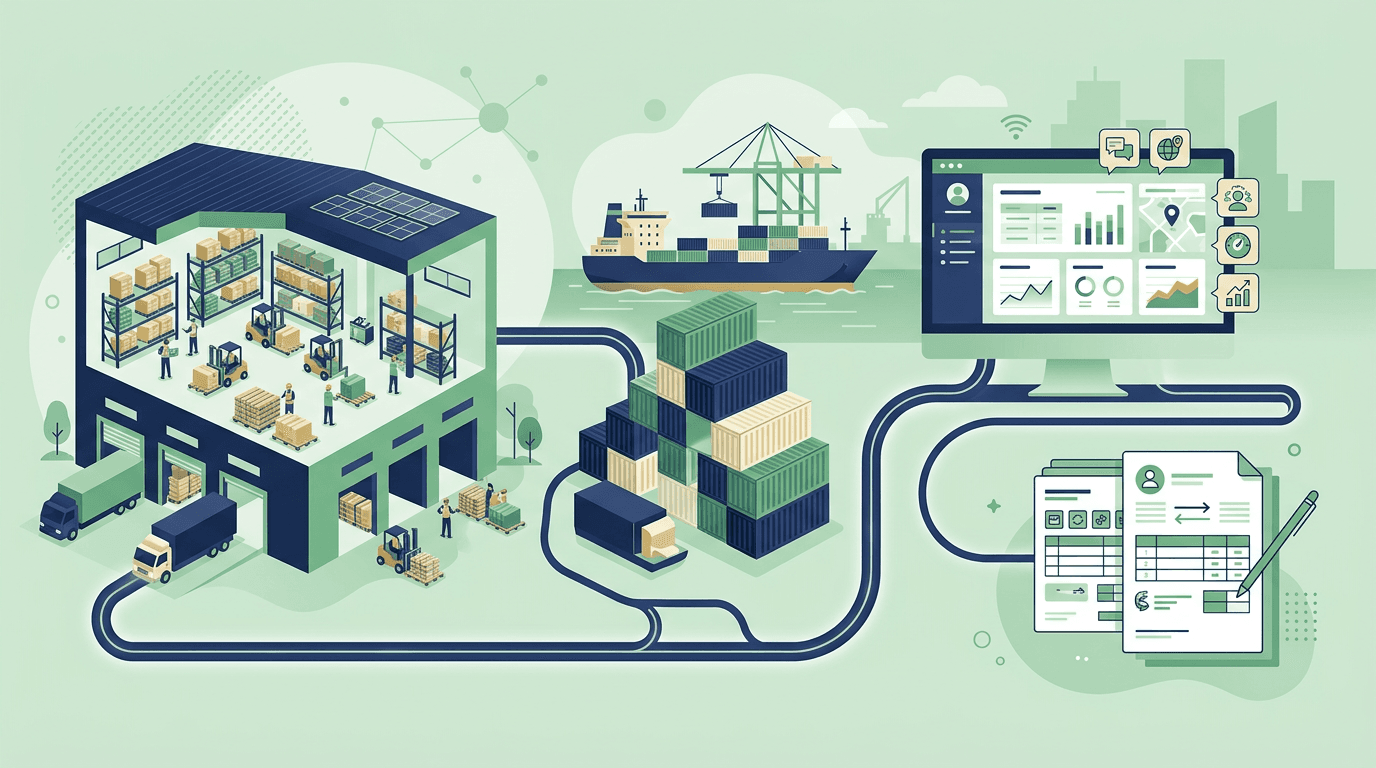
The financials module is usually what tips the decision. Both Oracle EBS and Oracle Fusion Cloud cover the same core territory — general ledger, accounts payable, accounts receivable, fixed assets, cash management — but how they deliver those functions is where things get interesting.
Oracle EBS Financials is a mature system. It handles complex multi-currency, multi-ledger environments well, has decades of global tax localisation behind it, and is genuinely stable for organisations with heavily customised chart of accounts structures or long-standing third-party integrations. The honest limitation: enhancements move slowly, and a lot of what Fusion does out of the box requires custom development or significant configuration in EBS.
Fusion is built differently at the core. A unified data model, a single chart of accounts framework, shared services structures across business units. The General Ledger uses a multidimensional account hierarchy — which makes financial consolidation and intercompany reconciliation far less painful than in EBS, where those same processes often involve custom scripts or someone manually intervening at month-end.
| Feature Area | Oracle EBS | Oracle Fusion Cloud |
|---|---|---|
| General Ledger | Robust but requires manual period-end processes | Automated close with real-time sub-ledger accounting |
| Accounts Payable | Invoice approval via workflow, limited AI matching | Machine learning-assisted invoice matching and approval |
| Fixed Assets | Functional but configuration-heavy for complex depreciation | Simplified mass additions and integrated asset lifecycle |
| Financial Reporting | FSG and BI Publisher; separate setup required | OTBI and Smart View built-in with real-time access |
| Intercompany Accounting | Manual or custom-automated balancing | Automated intercompany balancing within the data model |
Sub-ledger accounting is one of the clearest gaps. Fusion's Subledger Accounting engine applies accounting rules consistently across all transaction sources in real time. EBS has sub-ledger accounting too, but it comes with more manual touchpoints and is harder to audit cleanly across distributed ledgers. For finance teams running regular external audits or working under IFRS 17 or ASC 842 compliance requirements, that reconciliation burden adds up quickly — and Fusion genuinely reduces it.
Real-Time Close Is a Structural Advantage
Fusion's continuous accounting model means period-end close starts with far less manual reconciliation. EBS organisations typically spend more time resolving sub-ledger-to-ledger variances before they can run final financial statements. See our guides to Accounts Payable and Accounts Receivable for the process detail.
Cash management is another area where the gap is practical, not theoretical. EBS handles bank reconciliation and cash positioning, but the tooling is largely static — reports run on demand, forecasting depends on extracts pushed into separate tools. Fusion's Cash Management includes real-time dashboards, predictive cash flow analytics, and direct bank connectivity via open APIs. For treasury teams managing accounts across multiple jurisdictions, that's a meaningful operational difference.
75%
of Oracle EBS customers cite financial close cycle time as a primary driver for evaluating a move to Oracle Fusion Cloud, according to Oracle's own migration research.
Source: Oracle Customer Advisory Board Research
Reporting is worth calling out directly. EBS uses Financial Statement Generator for GL-based reports and BI Publisher for formatted output. Both require technical configuration and produce largely static results. Fusion includes OTBI with real-time access to transactional data, plus Smart View for Excel-based analysis. The practical difference: finance users in Fusion can build and modify reports without raising a support ticket. In EBS, that same task usually needs a technical resource involved.
For organisations comparing Oracle EBS vs Fusion features within the financials domain specifically, the real question isn't which system covers more ground on paper. It's how much manual effort, custom development, and technical overhead you need to get equivalent results. Fusion wins that comparison clearly — for organisations prepared to work within standard processes. EBS stays competitive where requirements are highly specific and re-engineering in Fusion would cost more than it saves.
Procurement and Supply Chain Features: EBS vs Fusion
Procurement is where the architectural differences between EBS and Fusion stop being theoretical and start affecting people's working day. Both platforms cover the core cycle — requisitions, purchase orders, supplier management, receiving. But how they handle it, and what they connect to, is genuinely different.
Oracle EBS Procurement (iProcurement, Purchasing, iSupplier Portal) is mature and well-documented. It handles complex purchasing scenarios, multi-org structures, and approval hierarchies without much drama. Most organisations running EBS have layered years of configuration on top — custom approval workflows, supplier catalogues, third-party logistics integrations. For stable, predictable procurement operations, it still holds up.
Fusion Cloud Procurement covers the same ground but adds supplier self-service, embedded analytics, and tighter integration with Fusion SCM. The key difference is data architecture. Supplier qualification, contract management, and spend analytics sit in the same data model as financials. You're not reconciling procurement data against a separate financial ledger. That alone removes a common source of reporting delays we see in EBS environments. More on this in our Oracle Fusion Procurement overview.
Procurement module structure
Oracle EBS uses separate module silos for purchasing, iSupplier, and iProcurement, while Fusion Cloud consolidates these into a single data model with shared supplier master data.
On the supply chain side, EBS Advanced Supply Chain Planning and Manufacturing modules have served discrete and process manufacturers for a long time. Powerful tools. But they require significant technical resource to configure and maintain, and the separate product families don't always share clean data flows between them.
Fusion SCM takes a different approach entirely.
Demand Management, Supply Planning, Manufacturing, and Logistics are built on a shared object model. Changes in demand signals flow through to supply plans without manual reconciliation. The trade-off is maturity — certain niche manufacturing scenarios that EBS has handled through years of accumulated development are still catching up in Fusion. We see this come up regularly when organisations with complex process manufacturing requirements start evaluating a move.
| Feature Area | Oracle EBS | Oracle Fusion Cloud |
|---|---|---|
| Supplier Portal | iSupplier Portal (browser-based, limited self-service) | Supplier Portal with full self-service, qualification, and performance tracking |
| Procurement Approval Workflow | AME (Approvals Management Engine), highly customisable | BPM Workflow with configurable rules, less reliance on custom code |
| Supply Planning | ASCP — mature, complex configuration required | Fusion Supply Planning — unified data model, real-time scenario analysis |
| Spend Analytics | Separate BI Publisher/Discoverer reports | Embedded analytics within the procurement UI |
| Contract Management | Contracts for Procurement module (separate) | Integrated Enterprise Contracts within same data model |
Supplier data management is one area where Fusion has a clear, practical edge.
In EBS, the supplier master sits separately from customer and item master data. For organisations that handle both procurement and sales, that creates synchronisation headaches — duplicate records, manual clean-up, data that doesn't quite match across reports. Fusion's Trading Community Architecture shares supplier and customer data across modules. Not a glamorous feature. But it solves a real operational problem that surfaces constantly during audits of EBS environments.
Pros
- ✓Fusion's unified data model eliminates reconciliation between procurement and financial modules
- ✓Supplier self-service capabilities in Fusion reduce procurement team workload
- ✓Fusion Supply Planning supports real-time scenario modelling without separate tool dependencies
- ✓Embedded spend analytics give procurement managers direct visibility without custom reports
Cons
- EBS has deeper configuration depth in some niche manufacturing and MRP scenarios
- Migrating years of EBS supplier master data and purchase history to Fusion requires careful data cleansing
- Fusion SCM is still maturing in areas like process manufacturing and complex work-in-process
- Fusion's procurement workflow is less flexible for organisations that relied heavily on EBS AME customisations
So what does the decision actually come down to? Usually two things: how complex your procurement workflows are, and how much of your EBS configuration you'd genuinely need to rebuild.
EBS is still defensible for businesses with deeply customised procurement processes where rebuilding in Fusion would cost more than it saves. Fusion is the stronger choice where cross-module data consistency, supplier collaboration, and planning flexibility actually matter to the business — which, for most organisations evaluating this now, they do.
Reporting and Analytics: EBS vs Oracle Fusion
Reporting is one of the starkest differences between these two platforms. And it makes sense when you consider when each was built.
EBS came from an era when reporting meant scheduled batch runs and static outputs. You requested a report, waited, and got a PDF or Excel file back. Fusion was built with embedded analytics from day one. That difference in philosophy shows up everywhere.
How Reporting Works in Oracle EBS
Standard EBS reporting runs through Oracle Reports or BI Publisher. The process is familiar to anyone who's used it: submit a request, wait for it to complete, receive a flat output. Want real-time visibility into financials or procurement? You're looking at custom development or a separate BI layer — typically OBIEE.
Ad hoc queries are technically possible. In practice, most business users can't do them without IT help.
We see this constantly during technical audits. EBS organisations have usually landed on one of two workarounds:
- The finance or ops team raises data requests through IT whenever they need something
- They've invested in a dedicated reporting tool sitting on top of the EBS database
Both carry ongoing cost. Neither gives business users the independence they actually want.
EBS Reporting Requires Extra Layers
Most EBS deployments cannot deliver real-time analytics without a separate BI tool. This creates additional licensing costs, maintenance overhead, and a dependency on technical staff that Fusion largely eliminates.
How Reporting Works in Oracle Fusion
Fusion ships with Oracle Transactional Business Intelligence (OTBI) and Oracle Analytics Cloud (OAC) built in. OTBI lets business users build ad hoc reports directly against live transactional data — no batch process, no IT ticket. OAC goes further, adding predictive analytics, machine learning-assisted forecasting, and dashboards that update in real time. Finance teams who prefer Excel can connect through Smart View, and formatted statements are covered by Financial Reporting Studio.
Each Fusion module also comes with pre-built dashboards out of the box. Financial close status, procurement spend, headcount trends — ready at go-live. Most teams customise them over time, but there's a working baseline from day one.
That's not the case in EBS. Minimal is probably the right word for what comes standard.
Example: Finance Team Using OTBI
A finance controller running Fusion can open OTBI, select subject areas for general ledger and payables, drag in the dimensions they need — cost centre, period, supplier — and produce a variance report without raising an IT ticket. In EBS, the same task would typically require a custom report request or an OBIEE developer.
Feature Comparison at a Glance
| Capability | Oracle EBS | Oracle Fusion Cloud |
|---|---|---|
| Real-time reporting | Limited; typically batch-based | Native via OTBI on live data |
| Ad hoc queries for end users | Complex; usually requires IT | Self-service through OTBI |
| Pre-built dashboards | Minimal out of the box | Included per module at go-live |
| Predictive analytics | Not available natively | Available via Oracle Analytics Cloud |
| Mobile reporting access | Not supported natively | Responsive dashboards on mobile |
| Third-party BI integration | Common requirement | Supported but less often necessary |
The Practical Impact on Decision-Making
Data latency is one of the most consistent complaints we hear from EBS users. Reports show yesterday's picture. By the time a procurement manager sees committed spend against budget, the month is half over.
Fusion changes that dynamic. That same manager can check mid-month, see where they stand, and adjust purchasing decisions before they become a problem. It sounds straightforward — but it genuinely shifts how quickly teams can act.
There's a cost dimension too. EBS environments typically carry significant ongoing spend: BI tool licences, data warehouse maintenance, custom report builds that need updating every time something changes upstream. Fusion reduces that overhead. It doesn't eliminate the need for reporting governance, but the baseline cost is lower.
Data Latency Has Real Costs
When reports reflect old data, decisions get delayed or made on incomplete information. Fusion's real-time reporting reduces this risk across finance, procurement, and operations without requiring a separate data warehouse build.
What Neither Platform Resolves Automatically
Moving to Fusion does not automatically mean your reporting is sorted. Worth saying plainly.
Good analytics depends on clean, well-structured data — and that's true regardless of platform. A common mistake we see during migrations is teams assuming Fusion's capabilities will paper over years of inconsistent data entry, chart of accounts sprawl, or weak master data governance. They won't. Better dashboards will just surface the mess more clearly.
The tricky part is that data quality issues often only become visible once you're inside the new system. That's why data cleansing and governance planning need to be part of the migration project itself — not something you circle back to later.
More on Oracle Fusion Financial Reporting
Security, Compliance, and Integration Features: EBS vs Fusion
Security and compliance aren't afterthoughts in enterprise software decisions. For most organisations, they're the deciding factor. And when you compare Oracle EBS vs Fusion features in this area, the two systems take fundamentally different approaches — with real operational consequences.
Security Architecture
Oracle EBS was built for on-premises deployment, and its security model shows it. Role-based access control exists. But configuration is manual throughout — database-level security, function security, menu exclusions. Your internal team sets all of it and keeps it running.
Segregation of duties controls exist in theory.
Enforcing them properly at scale is another matter. That typically requires a third-party tool like Oracle Access Controls Governor (now part of Oracle GRC). Without it, we see gaps — and during audits, those gaps surface fast.
Fusion is different from the ground up. Its security model combines job roles, data security policies, and abstract roles, and it ships with hundreds of pre-built roles aligned to common enterprise functions. Compliance teams get a working baseline immediately, not after months of configuration. Role assignments feed directly into Oracle Access Controls inside the Fusion platform, so SoD conflict detection happens in real time. No separate product required. Our guide to roles and segregation of duties covers this in depth.
80%+
Of Oracle EBS customers who attempt to implement segregation of duties controls without a dedicated GRC tool report material gaps in their audit readiness, according to practitioner assessments from Oracle partner engagements.
Source: Oracle Partner Advisory Data
Compliance Capabilities
EBS supports SOX, GDPR, and industry-specific frameworks. But enforcement is manual and configuration-heavy. Audit trails exist — they're just scattered across modules. Pulling them into anything coherent usually means custom reporting or Oracle Audit Vault.
Extra tooling. Extra effort. Extra risk when audit season arrives.
Fusion consolidates everything inside the application itself. Every transaction carries a full audit history, accessible through the UI and Fusion's reporting layer. For organisations subject to SOX, GDPR, or HIPAA, that built-in traceability cuts audit preparation time significantly. See also Oracle Fusion security and compliance.
There's also something EBS simply can't offer. Oracle maintains compliance certifications at the infrastructure level for Fusion Cloud — so when data residency requirements shift or encryption standards update, Oracle handles it. On EBS, that's your team's problem.
Critical: EBS Compliance Gaps After Support Ends
Oracle EBS Extended Support ends in 2030. After that date, Oracle will not release new compliance patches. If regulatory requirements change — around data privacy, for example — EBS customers on unsupported versions will carry full responsibility for closing those gaps manually. Factor this into your compliance roadmap now, not at renewal time. Read the NCSC advisory on Oracle EBS security for current guidance.
Integration Architecture
So what does integration actually look like across both platforms?
EBS connects to external systems through database-level APIs, XML Gateway, Oracle SOA Suite, and custom flat-file interfaces. These work. But the middleware investment to maintain them is substantial, and point-to-point integrations built on EBS accumulate technical debt fast. Any EBS upgrade carries the risk of breaking what you've already built.
Fusion is built around open REST APIs and Oracle Integration Cloud (OIC). Every major object — suppliers, employees, purchase orders, financial transactions — exposes a REST or SOAP endpoint that external systems can consume directly. No middleware layer needed. OIC adds pre-built adapters for Salesforce, SAP, Workday, NetSuite, and others.
The tricky part with EBS isn't the initial build. It's the ongoing maintenance as both sides of the integration evolve.
With Fusion, Oracle maintains the API contracts. Integrations hold up through application updates in a way EBS connections rarely do. For organisations running a hybrid environment — some processes already in Fusion, others still on EBS — Oracle provides certified integration patterns through its co-existence framework. Selective migration is possible. A full cutover on day one isn't required.
Related Reading: Oracle EBS vs Fusion
Which System Wins on Security and Integration?
If your organisation has straightforward compliance requirements and a well-resourced internal IT team, EBS is still manageable. But the overhead is real.
Third-party GRC tools. Manual configuration. Custom integration maintenance. Those costs compound.
Fusion's embedded security model, real-time SoD detection, built-in audit trails, and REST API-first architecture make it the stronger choice for most enterprises comparing Oracle EBS vs Fusion features today. Much of the compliance and integration burden that sits with your team on EBS shifts to Oracle on Fusion.
Before making a final call, quantify the gap in concrete terms — staffing costs, tooling costs, audit preparation hours. The security and integration difference between these two platforms is significant. And it gets wider every year EBS moves closer to end of support.
Deployment, Upgrades, and Ongoing Innovation: EBS vs Fusion
How you deploy and maintain your ERP has a direct impact on cost, risk, and how fast you can actually use new features. It's one of the sharpest differences between EBS and Fusion Cloud — and worth understanding before any platform decision gets made.
Oracle EBS: On-Premises Deployment and Managed Upgrades
EBS runs on-premises or in a private hosted environment. Your IT team — or a managed service provider — owns the infrastructure: servers, patching, database maintenance, performance tuning. Major version upgrades have historically required significant planning, heavy testing, and scheduled downtime.
Oracle has extended support for EBS 12.2 through at least 2032. That's useful runway. But it comes with ongoing cost: quarterly patches to apply, customisations to maintain through Oracle's AD Online Patching framework, and security updates to stay on top of.
Each patch cycle means regression testing. Especially if you've built custom extensions or connected third-party tools.
The practical result? Most EBS customers are running several patch bundles behind. A new feature ships, and getting it into production can take months of internal effort.
In our experience working with mid-market and enterprise clients, the hidden cost of EBS isn't the licence — it's the internal resource overhead of staying current. Patch management and upgrade projects consume engineering capacity that most IT teams would rather direct elsewhere.
Oracle Fusion Cloud: Continuous Delivery
Fusion Cloud works differently. Oracle manages the infrastructure, applies patches, and ships quarterly updates automatically. You don't choose when to upgrade — the platform moves on Oracle's schedule.
That removes a whole category of operational work. No servers to manage, no OS patching, no major version migrations to plan. But it creates a different responsibility: your team needs to review Oracle's quarterly release notes, assess what's changing, and update configurations or customisations where required.
It replaces infrastructure overhead with change management overhead. Generally lighter — but it still needs someone owning it.
The bigger difference is pace of innovation. Because Oracle controls the full stack, new features — AI-assisted automation, updated compliance rules, enhanced reporting — reach Fusion Cloud customers without a project. EBS customers have to wait for Oracle to backport features to the on-premises release track. And many newer capabilities are Fusion Cloud-only, full stop.
Fusion updates ship quarterly
Fusion Cloud customers receive new features on Oracle's quarterly schedule without managing infrastructure. EBS customers must plan and execute patch cycles internally, which delays access to new functionality and consumes engineering time.
Customisation and Extensibility
EBS has always been heavily customised. Direct database-level changes, custom forms, personalised workflows — all possible, and many enterprises have built deeply bespoke environments.
The tricky part is that every patch cycle risks breaking that custom code. Over time, this is exactly how EBS environments accumulate technical debt.
Fusion Cloud takes a different approach. Customisations live inside Oracle's approved extension framework — Page Composer, Application Composer, Oracle APEX for Fusion — kept separate from core product code. Quarterly updates are far less likely to break your configurations as a result. The trade-off: certain deep customisations aren't possible, or require Oracle's Platform as a Service tools to pull off. If you are modernising EBS-era forms, see how Oracle APEX compares with Oracle Forms.
For organisations with complex, heavily bespoke EBS environments, this is a significant consideration. Moving to Fusion isn't a lift-and-shift. It often means redesigning business processes to fit the Fusion model — and that work needs to be scoped carefully, not assumed away.
Evaluating Upgrade Readiness for EBS vs Fusion
- ✓Audit your current EBS customisations and identify which are standard configurations versus custom code
- ✓Assess how far behind your current EBS environment is on patch bundles and what it would take to get current
- ✓Map your existing integrations to understand migration complexity if moving to Fusion
- ✓Review Oracle's quarterly Fusion release notes process and confirm your team has capacity for change management
- ✓Evaluate whether your infrastructure team has the capacity to continue managing EBS operations through to 2032
- ✓Identify which new Fusion-only features (AI automation, advanced analytics) are relevant to your business case
- ✓Confirm your data migration and testing strategy before committing to a Fusion Cloud timeline
The Innovation Gap in Practice
Oracle has been direct about where its R&D investment is going: Fusion Cloud. AI capabilities, embedded analytics, process automation — built for Fusion first, and in many cases exclusively. EBS continues to get security patches and regulatory updates. It does not get the new capability.
For a practical view of what a move involves, read what changes when you move from EBS to Fusion and our implementation guide.
Ready to Evaluate an Oracle Fusion Migration?
AppsolveGroup helps organisations assess the real capability gaps between EBS and Fusion Cloud — tied to your specific modules, workflows, and reporting requirements. Not a generic comparison. A gap analysis built around how your business actually operates.
Ready to Evaluate an Oracle Fusion Migration?
Book a consultation with our Oracle team to map the capability gaps for your specific modules, workflows, and reporting requirements.
Book a ConsultationPlan your next step
You might also find helpful
Oracle Fusion vs Oracle EBS
The full comparison hub for organisations weighing an EBS to Fusion move.
What Changes from EBS to Fusion
A practical view of what changes for users, processes and IT when you move.
Oracle Fusion Implementation Guide
Step-by-step guidance for planning and delivering an Oracle Fusion programme.
OTBI Reporting in Oracle Fusion
How Fusion's self-service reporting replaces EBS batch reporting.
Ready to Evaluate an Oracle Fusion Migration?
Talk to APPSolve Group for clear, practical guidance from an experienced Oracle partner.