Oracle EBS vs Fusion: Cost Comparison
The real cost of staying on EBS vs moving to Oracle Fusion: licensing, infrastructure, migration, and total cost of ownership explained.
- 1.The Real Cost of Staying on EBS vs Moving to Oracle Fusion
- 2.Licensing Model Differences: EBS Perpetual vs Fusion Subscription
- 3.Infrastructure and Hosting Costs: On-Premises EBS vs Fusion SaaS
- 4.Implementation and Migration Costs: What to Budget For
- 5.Ongoing Support and Maintenance Costs: EBS vs Fusion
- 6.Total Cost of Ownership (TCO): Building the Business Case
- 7.Build Your EBS vs Fusion Business Case with AppsolveGroup
Choosing between Oracle EBS and Oracle Fusion Cloud involves more than licensing fees. Support costs, infrastructure, customisation debt, and long-term scalability all factor into the true cost of each path.
- ✓Oracle EBS support costs are rising as the platform approaches end of extended support
- ✓Fusion Cloud shifts infrastructure costs from capital expenditure to a subscription model
- ✓Customisations built on EBS rarely transfer directly to Fusion, adding hidden migration costs
- ✓Staying on EBS can limit your ability to adopt newer Oracle modules and integrations
- ✓Total cost of ownership comparisons must account for implementation, training, and ongoing maintenance
The Real Cost of Staying on EBS vs Moving to Oracle Fusion
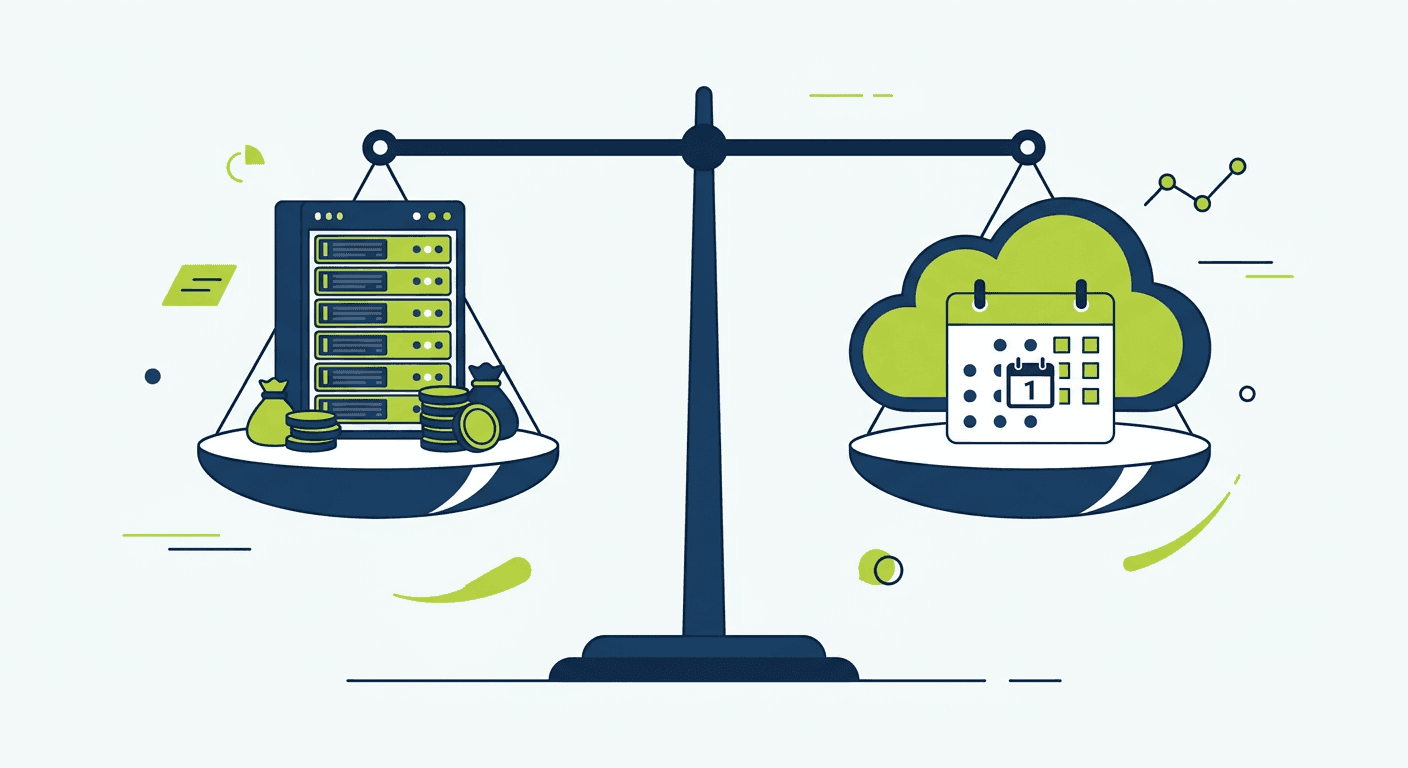
When organisations start comparing Oracle EBS vs Fusion cost, they almost always begin with licensing. That's the wrong starting point.
Licensing is one line item. The real picture includes infrastructure, support contracts, customisation maintenance, upgrade cycles, staffing, and the cost of what the platform simply won't let you do. We see organisations underestimate this scope constantly. And it leads to cost comparisons that look clean on paper but fall apart in practice.
Here's how both sides actually break down.
What You Are Actually Paying for on Oracle EBS
Most organisations running EBS have been on it for a decade or more. That history means layers of customisation, a meaningful hardware or hosting footprint, and a support model built around a platform Oracle stopped actively developing for general availability some time ago.
Support costs are climbing. Extended support for EBS 12.2 runs through 2031, but that's not a permanent arrangement. Once you move into Sustaining Support, new fixes and security patches stop. Many organisations on older EBS versions are already filling that gap with third-party support contracts, and those aren't cheap. This is a cost that tends to surprise teams who haven't looked closely at their support terms recently. See our NCSC advisory on Oracle EBS security for the security side of that risk.
Infrastructure stays your problem. On-premises or hosted, the bill sits with you. Servers, database licences, storage, disaster recovery, the internal team to manage it. None of that disappears because Oracle's subscription model looks appealing on a slide deck.
Customisations are where the hidden cost usually lives.
EBS is highly configurable, a big part of why so many organisations chose it. But every bespoke modification needs to be tested, and often reworked, when Oracle releases patches or an upgrade is required. During technical audits we often see teams that haven't done a major upgrade in several years sitting on a much larger customisation burden than they realise. It compounds quietly.
What You Are Actually Paying for with Oracle Fusion Cloud
Fusion Cloud runs on a subscription model. Oracle owns the infrastructure, handles updates, pushes new features quarterly. That fundamentally changes the cost structure. But it doesn't make it cheaper by default.
Capital expenditure becomes operating expenditure. No hardware to own or host; infrastructure is bundled into the subscription. For finance teams, that's genuinely easier to plan around. The fees don't go away; they just become a recurring line rather than a capital project.
Implementation costs are the big one. This is where we see organisations get caught off guard most often. Moving to Fusion is not a lift-and-shift. It requires process redesign, data migration, integration work, and training. For mid-to-large organisations, implementation costs frequently exceed the first year of subscription fees. Scoping this properly before you sign anything matters more than most teams expect.
Customisation works differently too. Fusion is configured within supported boundaries, not customised the way EBS was. Oracle designed it that way to protect upgrade paths. For organisations with deep EBS customisations, that means rebuilding functionality, not porting code. That work has a real cost and needs to be modelled before any decision gets made. Our guide to what changes when you move from EBS to Fusion covers this in detail.
Ongoing costs are more predictable. Once you're live, the cost structure tends to stabilise. Oracle manages patches and upgrades, so there are no surprise remediation projects mid-year. New functionality rolls out without separate licensing negotiations in most cases. That predictability has genuine value, particularly for teams that have been through painful EBS upgrade cycles.
The Cost Comparison That Actually Matters: Total Cost of Ownership
Licence versus subscription is not a meaningful comparison on its own. What matters is total cost of ownership across a defined period, typically five to seven years.
For EBS, that TCO includes:
- ✓Current and projected support fees, Oracle and third-party
- ✓Infrastructure and hosting costs
- ✓Internal IT staffing for maintenance
- ✓Customisation maintenance across upgrades
- ✓Regulatory or security remediation on an ageing platform
For Fusion Cloud, that TCO includes:
- ✓Subscription fees across all required modules
- ✓Implementation and integration costs, often the largest single item
- ✓Change management and training
- ✓Third-party tools needed to bridge any gaps
- ✓Ongoing administration and configuration support
Neither path is inherently cheaper. The outcome depends on the size of your organisation, the complexity of your EBS environment, and how much technical debt has built up.
Organisations with heavily customised EBS setups almost always find migration costs higher than the initial estimate. Those running relatively standard configurations tend to have smoother, less expensive transitions.
Related Reading
Where Organisations Typically Get This Wrong
The most common mistake: treating migration as a one-time cost and comparing it against an annualised EBS figure. That framing distorts both options.
EBS costs tend to grow as the platform ages and support terms worsen. Fusion front-loads implementation spend but often stabilises in later years as infrastructure and maintenance overhead drops. Comparing year-one numbers doesn't tell you much.
The second mistake is ignoring the cost of doing nothing.
Staying on EBS isn't a neutral position. It limits integration with Oracle's newer product suite, constrains access to modern reporting capabilities, and increasingly creates a staffing problem. EBS expertise is getting harder to hire. That's a pressure that compounds quietly until it isn't quiet anymore.
Neither of those points automatically favours one platform. They're variables that need to be modelled against your actual environment. A credible cost comparison requires your data, not industry averages or a vendor's reference case.
Licensing Model Differences: EBS Perpetual vs Fusion Subscription
How you pay for Oracle software shapes your total cost more than most organisations realise. And the gap between EBS and Fusion starts at the licensing level itself.
- Oracle EBS Perpetual License
- A perpetual license is a one-time payment that grants permanent rights to use a specific version of Oracle E-Business Suite, with ongoing Annual Support charges (typically 22% of the license fee) required to receive updates and technical support.
Oracle E-Business Suite runs on a perpetual model. One upfront payment, permanent usage rights, then Annual Support fees every year after that. Those support fees cover patches, security updates, and access to Oracle Support.
On paper it looks like a fixed cost. In practice, it becomes a recurring obligation that's very hard to escape. Drop support and you lose access to critical security patches, which isn't a realistic option for any live ERP environment.
Oracle Fusion works differently. No upfront license purchase at all.
You pay an annual subscription based on user count and the modules you activate. That subscription bundles software access, infrastructure, maintenance, and upgrades into one figure, which sounds cleaner but makes direct comparisons with EBS genuinely tricky.
| Cost Element | Oracle EBS (Perpetual) | Oracle Fusion (Subscription) |
|---|---|---|
| Initial payment | High upfront license fee | No upfront license cost |
| Ongoing fees | Annual Support (~22% of license) | Annual subscription per user/module |
| Infrastructure | On-premise hardware and hosting costs | Included in subscription |
| Upgrades | Separate project cost | Included in subscription |
| Customisation costs | High, impacts upgrade cycles | Lower, configuration-based model |
The structural difference goes beyond payment schedules.
With EBS, infrastructure sits completely outside the license: servers, data centres, the internal team managing patches and customisations, all separate costs. With Fusion, those are folded in. That's why comparing the annual support fee directly against a Fusion subscription is misleading. They don't cover the same things.
A common mistake we see during cost reviews: organisations look at the two annual fees side by side and treat it as a like-for-like comparison. It isn't.
Mid-Market Manufacturer: EBS vs Fusion Annual Cost Breakdown
A manufacturer with 300 ERP users running Oracle EBS might be paying annual support fees on a historic license portfolio, plus separate costs for on-premise infrastructure, a small internal team to manage patches and customisations, and periodic upgrade projects every five to seven years. Moving to Oracle Fusion Financials and Supply Chain on a per-user subscription consolidates infrastructure, support, and upgrades into one predictable annual fee, but adds implementation and change management costs upfront that need to be accounted for in any honest comparison.
One thing that often gets missed: if your organisation already owns EBS licenses and has infrastructure in place, the perpetual model can look cheaper in year one. It frequently does.
Stretch that out to a five-to-ten year window and the picture shifts. Factor in EBS upgrade projects, the growing cost of maintaining heavy customisations, and the shrinking pool of skilled EBS technical resources, and Fusion starts to look more competitive.
So what does the licensing model actually determine? More than most teams expect. New modules, upgrade planning, headcount decisions: all of it flows from this starting point. Before any honest total cost of ownership comparison can happen, you need a clear view of what each model actually obligates you to spend, and what it quietly leaves out. For the functional side of that decision, see our EBS vs Fusion feature comparison.
Infrastructure and Hosting Costs: On-Premises EBS vs Fusion SaaS
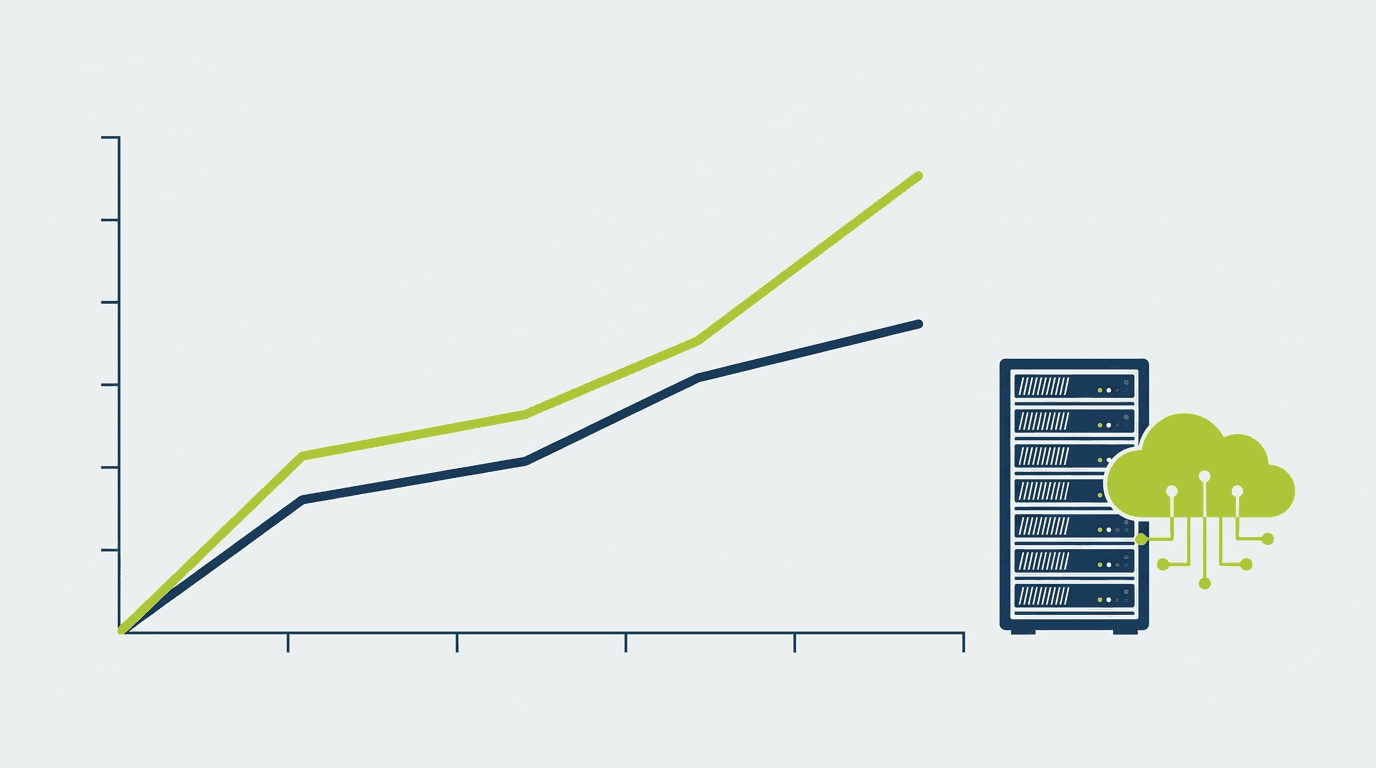
Infrastructure is where the real financial gap usually shows up. Licensing fees dominate most conversations about Oracle EBS vs Fusion cost, but the cost of running the underlying infrastructure is where organisations consistently underestimate their total spend.
Oracle EBS is on-premises. Your organisation owns the problem: servers, storage, networking, data centres, and the people keeping it all running. Capital expenditure sits on your books, whether you own hardware outright or lease it. Add power, cooling, physical security, and hardware refresh cycles every three to five years, and large EBS deployments can run into hundreds of thousands of pounds annually. Before you've even touched licensing or support.
Oracle Fusion Cloud works differently. Oracle manages the infrastructure entirely: servers, patching, security updates, database maintenance, disaster recovery. You access the software over the internet, and that infrastructure cost gets folded into the subscription fee rather than appearing as a separate capital or operational line item.
That shift from CapEx to OpEx matters. Not just for the accountants, but for how predictable your costs actually are, year to year.
Up to 40%
Estimated reduction in infrastructure-related IT spend reported by organisations migrating from on-premises ERP to cloud SaaS, primarily driven by eliminating hardware, data centre, and system administration costs.
Source: Oracle Cloud Migration Business Value Study
So what does each model actually cost to run?
What EBS infrastructure costs typically include:
- ✓Server hardware (owned or leased)
- ✓Storage area networks and backup infrastructure
- ✓Data centre space, power, and cooling
- ✓Network bandwidth and security appliances
- ✓Operating system and database licences (separate from EBS)
- ✓Database administrators and system administrators
- ✓Hardware refresh and end-of-life replacement
What Fusion SaaS infrastructure costs typically include:
- ✓A portion of the subscription fee (no separate line items for the above)
- ✓Internal IT resource to manage integrations and user access
- ✓Any third-party middleware or integration platform costs
This distinction matters when you're building a business case. EBS infrastructure costs are often spread across IT, facilities, and procurement: different budget owners, different approval cycles. That makes them easy to undercount. Fusion consolidates most of it into a single vendor contract.
Underestimating Hidden EBS Infrastructure Costs
Organisations often compare EBS support fees directly against Fusion subscription fees, ignoring the separate infrastructure costs sitting in IT, facilities, and procurement budgets. A like-for-like cost comparison must include server maintenance, DBA resource, storage, and data centre overhead, otherwise the EBS total is materially understated.
That said, on-premises infrastructure isn't automatically more expensive in every scenario. Organisations with long-term data centre contracts already locked in, fully depreciated hardware, and a stable internal IT team may find their marginal EBS infrastructure cost is relatively low in the short term.
The picture changes fast when a hardware refresh comes due. Or when a senior DBA hands in their notice.
Fusion also includes built-in disaster recovery and high availability as part of the service. Replicating that on-premises means investing in redundant infrastructure that, in our experience, often gets deprioritised due to cost, until something goes wrong.
Pros of Fusion SaaS infrastructure
- No capital expenditure on servers or data centre hardware
- Disaster recovery and high availability included in the subscription
- Infrastructure patching and security updates handled by Oracle
- Predictable monthly or annual cost with no hardware refresh cycles
Cons of Fusion SaaS infrastructure
- Less control over infrastructure configuration and timing of updates
- Dependency on internet connectivity and Oracle's uptime SLAs
- Potential data residency concerns for regulated industries
- Customisations are restricted compared to an on-premises environment
The infrastructure comparison is rarely clean-cut. But the direction is consistent. The longer an organisation stays on EBS, the more its infrastructure costs tend to grow relative to the alternative: hardware ages, support contracts escalate, and the internal expertise needed to maintain the environment gets harder to retain. Harder to replace, too.
Implementation and Migration Costs: What to Budget For
Licensing and infrastructure get the most attention when organisations compare Oracle EBS vs Fusion on cost. Understandable: they're visible, recurring, and easy to line up in a spreadsheet. But implementation and migration is where budgets actually break down.
These are one-time, high-effort costs.
And they vary enormously, depending on how complex your EBS environment is, how many modules you're moving, and how much customisation has accumulated over the years.
For a mid-sized organisation on a reasonably standard EBS configuration, Fusion Cloud implementation costs typically start in the hundreds of thousands. Multi-country, multi-entity deployments can exceed seven figures. A heavily customised EBS instance, with years of bespoke extensions, integrations, and reporting layers bolted on, will cost considerably more to migrate than a cleaner setup. The range is wide because the variables are wide.
So what are the major cost categories?
- ✓System integrator fees
- ✓Data migration
- ✓Testing
- ✓Training
- ✓Change management
Of these, data migration and testing are consistently underestimated. We see this constantly during technical audits. Historical data cleansing alone can consume a significant chunk of the project budget, particularly if data quality has degraded over time, or you're consolidating multiple EBS instances into one. Our guide to Oracle Fusion data migration explains how to scope it.
How to Build a Realistic Migration Budget
Audit Your Current EBS Environment
Document every customisation, integration point, and third-party connection before scoping the project. This forms the baseline for estimating migration complexity and system integrator hours.
Classify Data Migration Requirements
Separate historical data from transactional data. Decide what needs to move, what can be archived, and what requires cleansing. Poor data quality is one of the main reasons migration timelines and costs overrun.
Get Fixed-Scope Quotes from Multiple Integrators
Time-and-materials contracts expose you to cost overruns. Where possible, push for fixed-price or milestone-based agreements, and compare at least two or three qualified Oracle implementation partners.
Budget Separately for Training and Change Management
Fusion Cloud works differently from EBS. Users need structured training, and process changes require active management. These costs are real and should not be absorbed into the general implementation budget.
Plan for a Parallel Running Period
Running EBS and Fusion simultaneously during go-live carries additional licensing, support, and staffing costs. Build this period explicitly into your budget rather than treating it as a contingency.
System integrator fees deserve scrutiny. Oracle Fusion implementations are delivered by certified partners, and day rates vary considerably. A large global SI costs more than a specialist mid-market partner, and the value of that premium isn't always obvious. What actually matters: the experience level of the consultants assigned to your project, and the quality of their Fusion-specific delivery methodology. Both affect cost and outcome more than the firm's name does. See how we deliver in our Oracle Fusion implementation services.
EBS customisations with no direct Fusion equivalent are their own cost category entirely. Fusion is built around standard processes. Where your business has diverged from those standards in EBS, three options exist: re-engineer the process to fit Fusion, build an extension using Oracle's extensibility tools, or accept a functional gap. Each carries a cost. And those decisions need to be made early, not halfway through the build phase.
Underestimating Customisation Re-engineering Costs
Organisations often assume EBS customisations will transfer cleanly into Fusion Cloud. They rarely do. Budget explicitly for assessing, re-building, or retiring every customisation before signing off on an implementation quote.
Testing is where budget shortfalls cause delays that compound. A migration at this scale needs unit testing, integration testing, user acceptance testing, and regression testing, each requiring dedicated time and resource. Most organisations understaff this phase. They pay for it later in extended timelines and post-go-live issues. Read our Oracle Fusion testing strategy guide for how to plan it.
Training costs depend on user base size and how far EBS workflows have drifted from Fusion's standard processes. The tricky part is that in environments where EBS was heavily adapted to mirror legacy business processes, the learning curve for Fusion is steep. Training investment needs to reflect that reality, not a best-case assumption. See change management for how to budget adoption work.
One cost that rarely appears in initial budgets: the first twelve months after go-live.
Hypercare support, additional consultancy to resolve issues, and the productivity dip that follows any major system change are all real expenditure. Build them into your total cost of implementation, not as a contingency you hope to avoid.
How long does a typical Oracle Fusion Cloud implementation take?
For a mid-sized organisation, a phased Fusion implementation typically runs 12 to 18 months. Larger or more complex environments with multiple countries, business units, or heavily customised EBS instances can take 24 months or longer.
Can we phase the migration to control costs?
Yes. Many organisations adopt a phased approach, migrating modules or business units in sequence rather than all at once. This spreads cost over time but extends the period where you're maintaining elements of both systems.
Do implementation costs affect the total cost comparison between EBS and Fusion?
Significantly. The implementation cost is a major one-time expenditure that needs to be factored into any multi-year cost comparison. Organisations that look only at annual licensing or subscription costs often understate the true cost of moving to Fusion.
What is the biggest driver of implementation cost overruns?
Scope creep and unresolved customisation decisions are the two most common causes. When the approach to each EBS customisation is not decided early, it surfaces during build or testing, disrupting timelines and increasing integrator hours.
Should we use Oracle directly or a third-party implementation partner?
Most organisations use a certified Oracle implementation partner. Oracle's own professional services team is available but is often more expensive and in higher demand. Choosing a partner with demonstrable Fusion delivery experience in your industry is more important than choosing on price alone.
Implementation and migration costs are substantial, routinely underestimated, and belong in any honest comparison of Oracle EBS vs Fusion cost. A migration that looks cost-neutral on a subscription-versus-support basis can look very different once implementation, data migration, training, and hypercare enter the calculation. Factor them in from the start, not after you've signed the contract.
Ongoing Support and Maintenance Costs: EBS vs Fusion
Implementation gets most of the attention. But once that's done, you're looking at what you pay every year just to keep the lights on. This is where the EBS vs Fusion cost gap becomes much harder to ignore.
And where EBS tends to be consistently underestimated.
EBS Annual Support Costs
Oracle EBS customers on Premier Support pay an annual maintenance fee, typically 22% of net licence fees. On a large deployment, that's a substantial number before you've accounted for anything else.
And that's just the Oracle invoice.
EBS also requires internal or third-party resource to manage patches, apply updates, and maintain customisations. Every quarterly patch cycle triggers testing requirements. Most long-running EBS deployments carry significant customisations, and regression testing alone can consume weeks of IT time, or translate directly into consultancy spend.
Third-party support providers like Rimini Street can reduce that annual fee. But the trade-off is real. You give up access to Oracle-issued patches and future updates, which quietly narrows your options when it comes to any eventual upgrade.
The hidden support burden
Organisations running heavily customised EBS environments often find that the true annual support burden, once internal labour, patch testing, and third-party consultancy are included, significantly exceeds the Oracle maintenance fee itself. This hidden cost is one of the most common gaps we see in EBS-to-Fusion business cases.
Fusion Cloud Support Costs
Fusion works differently. The subscription covers cloud infrastructure, quarterly updates, and Oracle's standard support, with no separate maintenance contract sitting alongside a perpetual licence.
Updates run on a fixed release schedule, applied by Oracle. You can't defer them indefinitely, which removes the patch backlog problem you get on EBS. That said, your team still needs to review release notes and test business-critical processes ahead of each cycle. That work doesn't disappear. Many organisations pair this with Oracle Fusion managed support to keep quarterly release effort predictable.
The tricky part is customisations.
For organisations that have kept to configuration and Oracle's native extensibility tools, the ongoing support burden is meaningfully lower than EBS. Where bespoke integrations exist, costs remain a real factor.
| Cost Area | Oracle EBS | Oracle Fusion Cloud |
|---|---|---|
| Annual Oracle fees | ~22% of net licence value per year | Included in subscription |
| Patch management | Manual; requires internal or external resource | Managed by Oracle; user testing still required |
| Customisation maintenance | High, especially post-patch regression testing | Lower if using standard configuration tools |
| Third-party support option | Available (e.g. Rimini Street) | Not applicable; subscription model |
| Internal IT overhead | Higher; dedicated EBS administrators typically required | Reduced; Oracle manages application layer updates |
Hidden Labour Costs on EBS
This one rarely shows up in a direct cost comparison. It should.
EBS environments need dedicated administrators with platform-specific skills: DBAs for the underlying database, middleware specialists for WebLogic or Application Server, functional consultants across major modules. Recruiting that expertise is harder than it was five years ago. EBS skills are becoming scarcer, and scarcity pushes contractor day rates up.
So what does Fusion change here? The platform-level administration moves to Oracle. Internal IT can focus on configuration, process improvement, and integration management, not infrastructure upkeep and patch cycles. Functional expertise is still required. That's not going away. But the operational overhead looks very different.
Related Reading
Which Model Costs Less Over Time?
There's no universal answer.
EBS can look cheaper year-to-year if your licence is fully paid down and the environment is stable. But that stability is getting harder to maintain as Oracle shifts its development investment firmly toward Fusion. The platform isn't standing still, and neither are the costs of keeping an ageing EBS environment running.
Fusion's subscription model gives you predictable annual costs. Fewer surprises from emergency patching, fewer unplanned consultancy calls. The downside: a recurring cost that doesn't reduce the way a fully amortised on-premises licence eventually can.
When organisations compare Oracle EBS vs Fusion cost across a five to ten year horizon, the full picture of labour, patching, third-party contracts, and skills availability consistently narrows the gap. In many cases, it tips the balance toward Fusion. Not because the subscription is cheap, but because the true EBS cost is almost always higher than the headline number suggests.
Total Cost of Ownership (TCO): Building the Business Case
Licensing fees and implementation budgets get the most attention when comparing Oracle EBS vs Fusion cost. They're also the least complete way to look at it.
A proper TCO analysis pulls together every cost category across five to seven years, so the decision rests on real numbers, not headline figures from a vendor deck.
Most organisations underestimate TCO because they treat this as a like-for-like swap. It isn't. EBS and Fusion have fundamentally different cost structures, and those differences compound over time.
Constructing a Realistic TCO Model
Build the model in layers. Start with what you know, then work outward toward the harder-to-quantify factors.
Building a Five-Year TCO Model
Establish your EBS baseline
Document current annual spend across licensing, support, infrastructure, customisations, and internal IT headcount.
Project EBS forward
Factor in Premier Support end dates, hardware refresh cycles, and any planned customisation work.
Build the Fusion cost model
Include subscription fees, implementation investment, data migration, integration work, and training.
Identify hidden cost offsets
Reduced infrastructure management, lower customisation burden, and redeployment of internal IT resource.
Apply a net present value (NPV) calculation
Compare both scenarios on a consistent financial basis.
Stress-test assumptions
Run best-case, base-case, and worst-case scenarios, particularly around implementation timeline and adoption.
The baseline step is where most business cases fall apart. We see this constantly during technical audits: an organisation pulls its annual Oracle support invoice and treats that as the cost of running EBS. It isn't. The real number includes internal staff time on patching, regression testing, and managing third-party integrations. None of that appears on a vendor invoice. All of it is real spend.
Where the Numbers Diverge
On a three-year view, EBS often looks cheaper. If implementation costs are already absorbed and the environment is relatively stable, Fusion's subscription model, with its continuous, visible spend, can look unfavourable by comparison.
By year five, the picture tends to shift.
EBS environments accumulate technical debt quietly. Customisations that need reworking with each upgrade. Integrations held together by manual maintenance. A growing gap between what the system does and what the business actually needs. Each of those carries a cost, even when it never shows up as a budget line.
The Hidden Cost of Customisation
EBS customisation costs rarely appear as a single line item. They are embedded in developer time, regression testing cycles, and delayed upgrades, and they grow with every release your team needs to maintain compatibility.
Fusion's subscription includes continuous quarterly updates, which removes the large periodic upgrade project EBS requires. But those updates aren't free in practice. Your team still needs processes to review, test, and communicate changes every quarter. That's a real cost. It belongs in the model.
Quantifying Business Value
A complete TCO analysis includes the cost of not acting.
If your finance team closes the books manually because EBS reporting can't keep up, or HR runs parallel spreadsheets alongside the system, those inefficiencies are quantifiable. Most teams just don't bother.
Fusion's unified data model, with finance, HR, procurement, and supply chain on a single source of record, creates reporting and process efficiencies that reduce manual workarounds. Harder to model than licence fees, yes. But real, and worth including in the business case. Our feature comparison shows where those efficiencies come from.
We build detailed TCO models that give your leadership team a clear, defensible view of both options.
Talk to Our TeamRisk Costs Are Part of TCO
Any honest Oracle EBS vs Fusion cost comparison has to include risk.
EBS running on ageing infrastructure, supported by a shrinking pool of specialist developers, and approaching the end of Oracle's extended support window carries real financial exposure. The probability of a critical failure, a compliance gap, or a forced migration under pressure all has a cost, even when it never appears as a line in the budget. Read the NCSC advisory on Oracle EBS security for the current security position.
Build Your EBS vs Fusion Business Case with AppsolveGroup
Our Oracle specialists help organisations model the true total cost of ownership, covering licensing, infrastructure, migration, support, and risk, so your leadership team can make a fully informed platform decision.
Build Your EBS vs Fusion Business Case with AppsolveGroup
Our Oracle specialists help organisations model the true total cost of ownership so your leadership team can make a fully informed platform decision.
Request a TCO AssessmentPlan your next step
You might also find helpful
Oracle EBS to Fusion: What Changes
A practical guide to what changes for users, processes and IT when you migrate from EBS to Fusion.
Oracle Fusion Cloud ERP: Modules Overview
Understand which Fusion modules your organisation needs and how they fit together.
Oracle EBS vs Fusion: Feature Comparison
A module-by-module look at how EBS capabilities map to Oracle Fusion.
Oracle EBS Security: NCSC Advisory
What the NCSC advisory means for your EBS environment and your options beyond extended support.
Oracle Fusion Project Planning
A structured approach to scoping, budgeting and planning an Oracle Fusion programme.
Build Your EBS vs Fusion Business Case
Talk to APPSolve Group for clear, practical guidance from an experienced Oracle partner.